
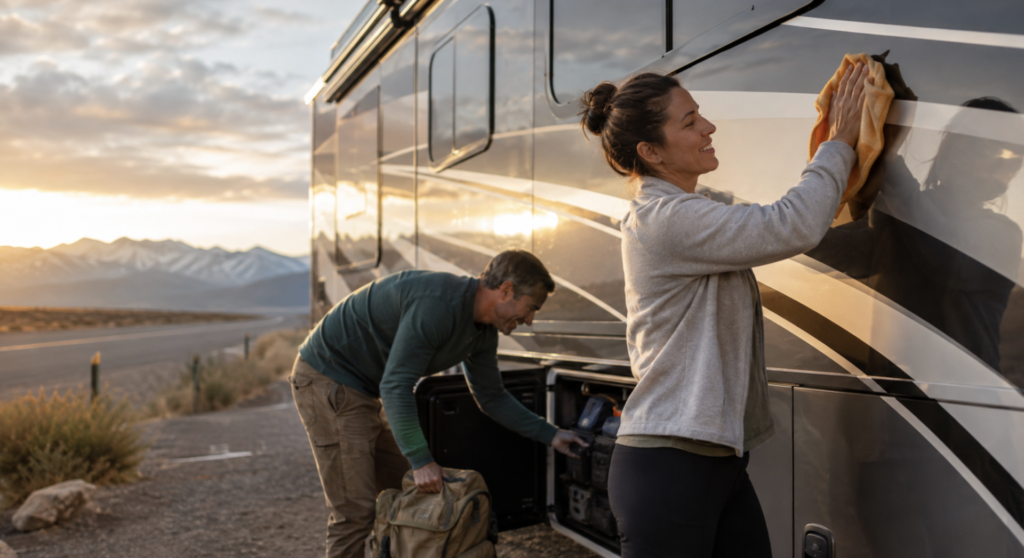
The best road trips begin long before the first highway exit, mountain overlook, or campground check-in. They begin at home, where travelers inspect their routes, organize their supplies, check their tires, and prepare their recreational vehicles for the miles ahead. One of the most valuable steps in that preparation is also one of the easiest to overlook: thoroughly cleaning and protecting the RV’s exterior.
A professional-quality RV Wash and Wax does more than improve the vehicle’s appearance. It removes substances that can damage the finish, adds protection against demanding road conditions, and helps travelers begin their journey with a recreational vehicle that looks cared for and ready for adventure. For people who consider their RV a home on wheels, exterior maintenance is an essential part of responsible travel preparation.
Travel news often focuses on destinations, scenic highways, national parks, and new camping experiences. Those stories inspire people to explore, but the condition of the vehicle carrying them deserves equal attention. A cleaner, protected RV can make the entire experience more enjoyable while helping preserve one of the owner’s most valuable travel investments. 🚐
Road-Trip Preparation Begins with the RV
A recreational vehicle faces conditions that ordinary passenger vehicles rarely experience to the same degree. Its large exterior provides an expansive surface where road film, mud, insects, tree sap, bird droppings, pollen, salt, and mineral deposits can accumulate. A long journey can expose the RV to intense sunlight, sudden rain, dusty roads, coastal air, and dramatic temperature changes within a matter of days.
According to Wikipedia’s overview of recreational vehicles, RVs can include living accommodations such as sleeping areas, kitchens, bathrooms, and other facilities designed to support life on the road. An RV is therefore more than transportation. It is part vehicle, part residence, and part travel headquarters.
That combination makes regular exterior maintenance especially important. Dirt left on the surface can trap moisture and contaminants against the finish. Insect residue and bird droppings may become increasingly difficult to remove after sitting in direct sunlight. Road grime can collect around trim, windows, seals, storage compartments, ladders, and other exterior components.
Washing the RV before departure gives the owner an opportunity to look closely at those areas. While cleaning, travelers may notice loose trim, damaged seals, chipped finishes, cracked light covers, or other concerns that might otherwise remain hidden. A clean exterior makes inspection easier and allows small maintenance needs to be addressed before they become inconvenient problems on the road.
Wax Creates a Protective Barrier for Travel
Waxing is not merely the final step used to produce a glossy appearance. It creates a protective layer between the exterior finish and many of the substances encountered during travel. That barrier can make it more difficult for grime, water spots, insects, and environmental debris to bond directly to the surface.
Sun exposure is a particular concern for RV owners. Recreational vehicles often spend hours traveling on open highways and days parked in campgrounds with little shade. Over time, prolonged ultraviolet exposure can contribute to fading, oxidation, chalkiness, and a dull exterior appearance. No surface treatment replaces covered storage or routine maintenance, but a suitable protective product can become an important part of a broader exterior-care plan.
Weather conditions can also change quickly during a road trip. The Federal Highway Administration’s road weather information explains how rain, snow, low visibility, high winds, and other weather events can affect road travel. Those same conditions can coat an RV with moisture, dirt, salt, and airborne debris.
Beginning the trip with a protected exterior makes cleanup easier after exposure to difficult conditions. Instead of allowing contaminants to settle directly onto an unprotected finish, travelers have an additional barrier working in their favor.
A Clean RV Improves the Travel Experience
RV travel is about freedom, exploration, and the ability to bring familiar comforts into unfamiliar places. The appearance of the vehicle may not determine whether a destination is beautiful, but it can influence how travelers feel when they arrive.
Pulling into a campground with a clean, polished RV creates a sense of pride and readiness. The vehicle looks inviting when friends or family gather outside for meals, conversation, or relaxation. Photographs taken at scenic destinations also look better when the RV appears bright and well maintained rather than covered in old streaks and highway grime.
This is especially meaningful during trips to America’s most photographed public lands. The National Park Service trip-planning resources help travelers find parks, activities, educational experiences, and destination information throughout the country. These environments can expose an RV to dust, pollen, mud, insects, and changing weather, yet they also provide the backgrounds for some of a family’s most memorable travel photographs.
A well-kept RV complements the experience. It becomes part of the story rather than simply the vehicle parked beyond the edge of the picture. ✨
Exterior Care Can Support Long-Term Value
An RV is a substantial investment, and its condition can affect the owner’s enjoyment as well as its future resale appeal. Buyers often form an immediate impression based on the exterior. Faded surfaces, dark streaks, heavy oxidation, stained graphics, or neglected seals can suggest that other areas may also have been overlooked.
Consistent washing helps prevent layers of contamination from building up over time. Waxing adds protection and preserves a cleaner, brighter appearance. Together, these steps can support the RV’s long-term presentation and make future detailing less difficult.
Routine care may also reduce the temptation to rely on aggressive cleaning methods later. When dirt and stains remain on a surface for extended periods, owners may resort to stronger chemicals or harsh scrubbing. Those approaches can create additional risks for decals, painted areas, gelcoat, trim, and sealants. Regular maintenance is generally easier on the vehicle than attempting to reverse years of neglect in a single weekend.
The goal is not perfection. The goal is consistency. An RV that receives thoughtful attention before and after major trips is more likely to retain the polished, welcoming appearance that made it attractive in the first place.
Smart Travel Planning Includes Vehicle Care
A successful road trip requires more than choosing a destination. Travelers must consider mileage, fuel stops, campground availability, road restrictions, weather, meals, rest periods, and emergency preparation. RV owners may also need to account for vehicle height, weight, turning space, electrical hookups, water access, and waste-disposal facilities.
The AAA road-trip planning platform provides maps, directions, fuel-stop information, attractions, and other resources for people traveling by road. The federal Recreation.gov trip-planning website also helps travelers explore campgrounds, tours, tickets, permits, and recreational opportunities on public lands.
Exterior preparation belongs on the same checklist as route planning and tire inspection. Cleaning the windshield, mirrors, headlights, taillights, cameras, and reflective surfaces can improve visibility. Clearing debris from vents and checking exterior fixtures can help identify anything that requires attention. Washing the roof, when it can be done safely and in accordance with the manufacturer’s recommendations, may prevent dirt from running down the sides during the first rainstorm.
This preparation creates a natural opportunity to inspect the RV from top to bottom. Owners can look at awnings, slide-out seals, storage doors, windows, roof accessories, hookups, and license plates while the vehicle is being cleaned.
Timing Matters Before a Major Road Trip
The best time to wash and protect an RV is not minutes before departure. Completing the work several days in advance allows time for careful cleaning, drying, inspection, and correction of any maintenance concerns discovered during the process.
Travelers should begin by checking the RV manufacturer’s care instructions. Exterior materials vary, and a product or technique that works well on one finish may not be appropriate for another. Owners should use compatible cleaners, soft washing tools, and controlled water pressure around seals, vents, windows, and exterior accessories.
The work should ideally be completed in mild conditions and away from intense direct sunlight. Hot panels can cause cleaning solutions or water to dry too quickly, leaving streaks or spots. Working in manageable sections helps produce an even result and prevents residue from remaining on the surface.
Weather should also be considered when selecting the preparation day. The National Weather Service provides forecasts, warnings, and safety information that can help travelers prepare for conditions at home and along the route. A calm, mild day is generally more comfortable for exterior care than a windy afternoon filled with dust or pollen.
Responsible Washing Protects More Than the RV
Where and how an RV is washed matters. Soap, grease, road residue, and other contaminants should not be allowed to flow untreated into storm drains, waterways, or environmentally sensitive areas. Travelers should follow local regulations and campground rules, particularly in regions experiencing drought or water restrictions.
Many campgrounds prohibit RV washing because of water use, drainage limitations, or environmental policies. That makes pre-trip cleaning at an appropriate location even more valuable. Commercial RV wash facilities may offer designated drainage systems and equipment designed for larger vehicles.
Travelers who clean their RV at home should use water thoughtfully, avoid unnecessary runoff, and select products suited to both the vehicle and the washing location. Preparation should also include checking whether the planned destination allows exterior washing. Assuming that a campground will permit it can result in frustration after arrival.
Responsible exterior care reflects the broader principles of thoughtful travel. The vehicle is maintained, local rules are respected, and the surrounding environment is treated with consideration.
Post-Trip Care Makes the Next Adventure Easier
Exterior maintenance should not end when the trip begins. After returning home, owners should remove accumulated insects, mud, road salt, tree sap, bird droppings, and other debris as soon as practical. Prompt cleaning prevents contaminants from remaining on the surface through changing weather and repeated sun exposure.
The post-trip wash is also an ideal time to inspect the RV for damage. Branches, gravel, severe weather, narrow roads, and crowded campsites can leave small marks that are easy to miss during the journey. Finding those issues early gives the owner time to schedule repairs before the next departure.
Travelers can also review the effectiveness of their preparation routine. Areas that became especially dirty may need more attention or a different protective approach in the future. Products and supplies that worked well can be added to the permanent travel checklist.
This simple cycle creates a reliable habit: clean and inspect before the trip, enjoy the journey, then clean and inspect again after returning home. Each step supports the next adventure.
Conclusion
The ultimate travel secret is not a hidden destination or an overlooked scenic highway. It is the understanding that memorable road trips begin with thoughtful preparation. A clean, protected RV is easier to inspect, more enjoyable to use, more attractive in travel photographs, and better prepared for the sun, rain, dust, insects, and road grime waiting beyond the driveway.
Routes, reservations, and destination research will always be central to road-trip planning. Trusted resources such as the U.S. Department of State’s travel information can help people prepare for journeys that extend beyond familiar roads and borders. Yet the vehicle itself remains the foundation of every RV adventure.
Taking time to wash, protect, and inspect an RV before departure is a practical act of care. It preserves the vehicle’s appearance, supports long-term value, and allows travelers to begin their journey with confidence. When the highway opens ahead and the next destination appears on the horizon, a road-ready RV makes every mile feel like part of the adventure. 🛣️